
Change in the worldwide automotive sector is not slow or predictable. It is fast and disruptive, and does not proceed at the same rate in every part of the world. Traditional automakers whose business plans depend on predictability of production and long-term investment will now be forced to reconsider all aspects of their businesses. Electrical changes, supply chain stress, unpredictable regulation, and aggressive competition from newcomers have changed the automotive industry into a moving landscape where agility rather than history matters.
Ford is at the heart of this changing world. A ubiquitous brand in American manufacturing, Ford has undergone something of a wholesale re-creation not just of its strategy but also of its entire global structure. The choices before Ford are not product line changes or geographical expansion but the relocation of production sites and consolidation of platforms for its models along with long-term investment plans, which signal the shifting global automotive balance.
Yet, all the changes occurring at Ford reflect a tension between the pursuit of innovation and the drive to be profitable, because electric vehicles demand huge investment while their traditional combustion-powered brethren remain the largest source of profit for now. The outcome is that a dual strategy: one that embraces collaboration and share technology with rivals in Europe and a strengthening of traditional pillars in North America.

1. A Global Industry Under Structural Pressure
We are experiencing arguably one of the largest structural transformations within the automotive industry since its conception. The imperative for electrification has become non-negotiable rather than simply one direction of travel and the impetus for this comes from government regulation, the climate agenda and changing customer demands. Simultaneously, increased costs in production, the volatility of the supply chain and the necessity to invest heavily in software and battery technology are changing how the whole industry functions. This is creating a radical and continuing restructuring of traditional business models within the automotive industry.
Automotive Industry Transformation Pressure Drivers:
- Mandatory shift toward electrification
- Rising manufacturing and development costs
- Increased global competition intensity
- Software and battery investment burden
- Supply chain and production restructuring
It is not only a matter of technology, but also of the structure of legacy manufacturers like the Ford Motor Company. Scale, strong brands and extensive supplier relationships that have helped sustain them in the past are no longer sufficient to remain competitive in the future. New entrants (especially those from China) are introducing faster development times and a more cost-effective production environment. The overall balance of power in the industry is shifting towards these more flexible players, adding pressure on traditional car manufacturers to adopt the same flexibility for survival.
The answer globally for many manufacturers seems to be a hybrid and flexible approach, blending internal development with external relationships. It’s cheaper and faster not to develop all of a company’s capabilities on their own. Ford seems to be following the same path of flexibility over absolute independence. The bottom line seems to be a requirement to be flexible over large scale.

2. Ford’s Strategic Reset Across Continents
Ford Motor Company is undertaking a broad strategic change with regards to managing its worldwide operations. Ford’s approach has gone from applying one single strategy globally to treating regional markets and respective industries individually based on specific region condition and respective industrial capabilities. In a strategic sense, Europe and North America are developing into two different strategic regions with varied objectives and investment rationales. The underlying trend indicates a move toward regional customization for global automotive planning. The intention is to allow a greater synchronization between production plans and product plans and regional environments.
Regional Automotive Strategy Realignment Framework:
- Region specific operational planning model
- Europe focused partnership and efficiency shift
- North America truck centric production focus
- Cost optimized manufacturing strategy approach
- Balanced transition between EV and ICE
In Europe, Ford is concentrating its efforts more on collaboration and the optimization of operations. Instead of relying solely on its own expensive stand-alone manufacturing, it is choosing partnerships that facilitate the sharing of both technology and costs, which has been forced upon it by the sheer intensity of competition and the pace of change within the electric vehicle space. As such, Ford’s strategy is now centered on longevity and the managing of costs rather than aggressive growth, enabling it to stand up to its rivals.
In North America, however, a more targeted approach is being taken. Instead, it is continuing to invest in its strongest area, the highly lucrative large truck and utility vehicle segments, instead of converting over some facilities to all-electric, so instead of taking some operations completely electric Ford is optimizing those plants to pump out gasoline-powered vehicles while other operations were planned to be all-electric but are only doing that to some degree so now both are occurring creating an optimization between current cash flow and future transformation.
3. Europe Strategy and the Geely Partnership
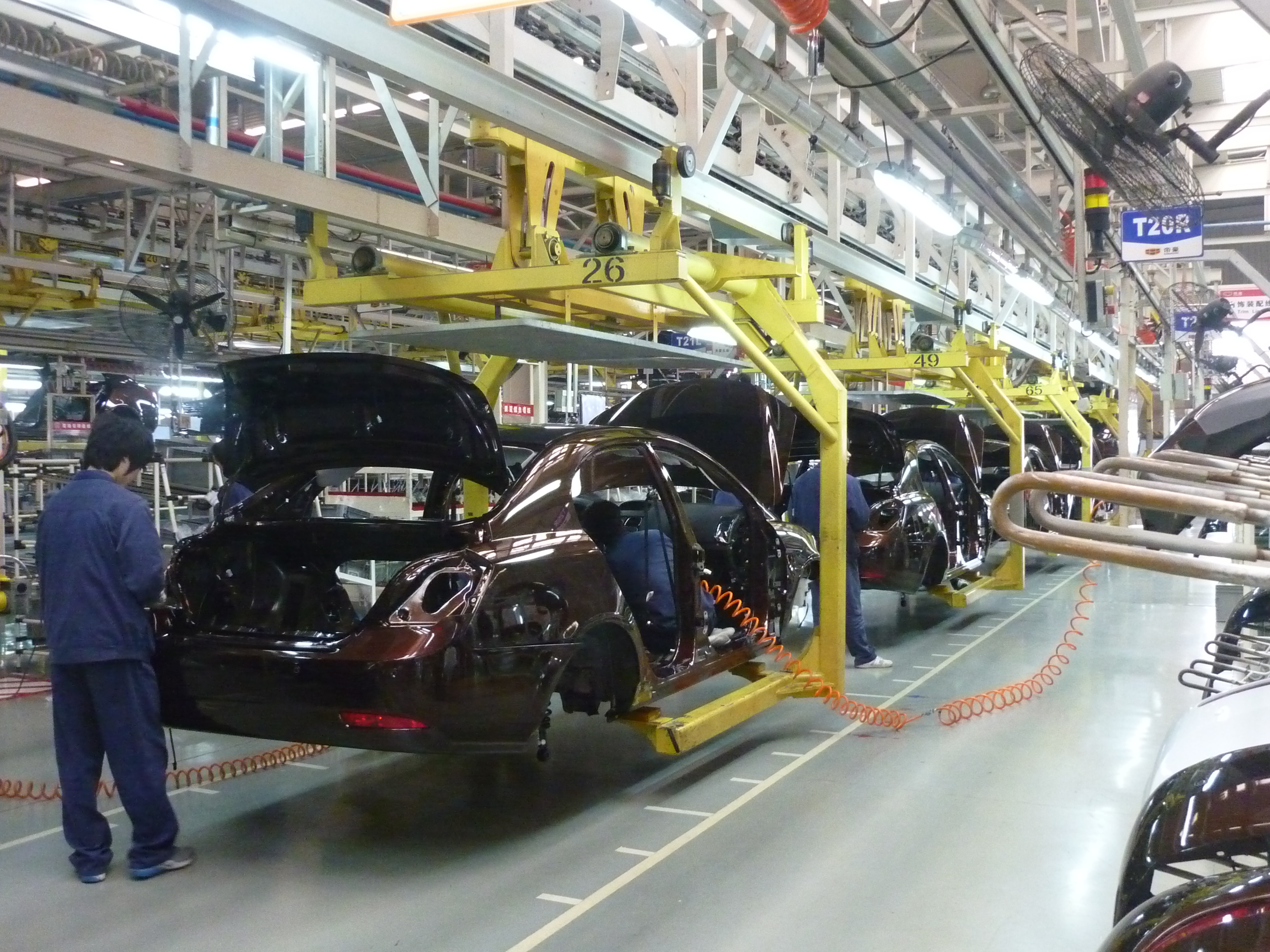
A different turn has been taken on Ford Motor Company’s strategy in Europe through the partnership which includes Ford’s Valencia Assembly plant in Spain. A part of the plant which was standing idle has been re-utilized with the partnership of Geely. This represents a transformation of unused manufacturing capacity into a collaborative manufacturing usage. This change aims to optimize efficiency, while allowing Ford to remain present in its European operations. This represents also a more practical strategy towards its assets utilization.
Shared Automotive Platform Collaboration Strategy:
- Valencia plant capacity repurposing model
- Shared new energy vehicle platform use
- Hybrid plug in and EV flexibility support
- Joint manufacturing efficiency optimization
- Market access and tariff strategy alignment
Under this deal, Geely is given access to the plant to manufacture vehicles that run on Geely’s new energy technology platform. This technology platform covers hybrid, plug-in hybrid and electric options allowing for flexibility for the companies in case that the uptake of electric vehicles in Europe is uneven, especially given that it is driven by regulatory requirements that also include mixed demand trends.
The deal could also allow for manufacturing Ford-branded vehicles through the new platform. This could signify an even closer technical and industrial cooperation between the two companies. The benefits of this deal for Ford would be to cut costs and to utilize their assets more efficiently. For Geely, this partnership will give access to European markets via localization and by avoiding existing tariff issues and regulations.

4. Manufacturing Realignment and Asset Optimization
The overarching strategy in respect to the Ford Motor Company’s industrial operations in Europe is moving towards an emphasis on cost, and financial discipline and better asset usage. Ford is looking critically at what each of its plants are used for, focusing heavily on increasing the return on investment for the operations as well as getting rid of wasted capacity. Factories that used to produce many versions of an old combustion model are being consolidated, refocused or closed altogether.
Industrial Efficiency and Production Reallocation Strategy:
- Idle capacity reduction and optimization focus
- Facility consolidation and repurposing efforts
- Demand aligned production restructuring model
- Cross platform manufacturing flexibility expansion
- Asset utilization and ROI improvement drive
It is not about cost reduction for its own sake; rather, it’s about adapting to what Ford sees as future demand. Because demand for older vehicle types has decreased due to a more rapid move to electrified transport, the existing production systems have been unable to run as efficiently, and the excess capacity will become a burden in the future. In an effort not to fall behind, Ford is going to reallocate or share facilities where feasible, seeking to wring additional value out of its industrial infrastructure.
More strategically, this approach signals a general trend within the industry where flexibility has become a competitive advantage. While previously scale was everything, today’s ability to change a line over more quickly, or cooperate between businesses to manufacture cars, will be paramount. Ford’s move to reorganize itself within Europe is the latest example of this paradigm shift.

5. North America Focus and the Truck Strategy
The Ford Motor Company is doubling down on its North American strategy and is focusing on its most lucrative and time-tested product line of trucks. Ford is continuing to rely heavily on the production of its F-Series line at various plants, due to constant strong demand for its trucks. The F-Series line of trucks continues to be the main profit driver and a flagship for Ford in North America. This action suggests a focus on financial security in the face of broader changes within the industry and it reinforces Ford’s dependence on its current offerings.
Profit Driven Product Strategy and Revenue Stability Model:
- F-Series production prioritization focus
- High margin truck segment reliance
- Strong regional demand alignment
- Brand identity centered on utility vehicles
- Stable revenue foundation maintenance
This financial certainty is crucial during Ford’s period of high capital expenditure on electric vehicles, a strategy which demands significant long-term commitment. By achieving high profitability in its established truck division, Ford is able to support its wider, less proven transformation into an electric and software-based manufacturer. This will help to create a baseline of secure cash flow that supports higher-risk innovations elsewhere, easing the financial pressures associated with uncertainty.
In the long run however, this approach is fraught with structural challenges. With steadily rising pressure to curb emissions, coupled with an evolving consumer base, Ford is attempting to juggle the balance between immediate returns and a long-term shift in strategy. By embracing gradual transformation as opposed to aggressive disruption, it is attempting to navigate immediate and future objectives concurrently.

6. Competitive Pressure from Chinese Automakers
Increasingly, Ford Motor Company’s strategy is influenced by China’s growing global dominance in the electric vehicle industry. Manufacturers like Geely have solidified their position by developing vertically integrated supply chains, fast product development cycles, and efficiency advantages in cost. These factors have allowed them to rapidly scale electric vehicle production and sell at competitive prices, making the global automobile industry much more dynamic.
Global EV Competition and Industrial Power Shift:
- Integrated supply chain advantage expansion
- Rapid EV development cycle leadership
- Aggressive global pricing competition
- Increased technological innovation speed
- Rising non traditional market leadership
The above has redefined competition in Europe and beyond. Chinese manufacturers are no longer just new players but competitive manufacturers with strong tech and manufacturing capacities. Their capacity to offer affordable EVS at scale has put substantial pressure on traditional manufacturers, requiring them to rethink development times, cost structures and platform strategies. The current competition is not only technological but also structural. Ford’s increasing willingness to share platforms and engage in strategic partnerships appears to be a pragmatic adjustment.
Building full proprietary EV platforms require considerable capital investment, engineering resources and time; sharing platforms allows for a faster route to market and minimizes the risks in development. Overall, it seems the entire industry is moving towards a co-development ecosystem rather than each corporation following its individual trajectory and collaboration may be one of the keys for survival in the coming years.

7. Technology Sharing and Platform Strategy
Increasingly Ford is investigating platform sharing as part of its new approach to product development. Rather than using its own in-house architectures for its new models it is exploring foreign and shared vehicle platforms in order to simplify development and decrease development costs. This is particularly significant as the development of new electric vehicles is a complex and lengthy platform development process which relies heavily on large capital investment and development lead-time, suggesting a more pragmatic attitude towards new product development and industrial production.
Shared EV Platform Development and Flexibility Model:
- External architecture integration strategy
- Reduced EV development complexity focus
- Faster vehicle launch capability improvement
- Regional regulatory adaptation flexibility
- Cost efficient engineering collaboration
Using the established platforms Ford has already available, it can speed up product launch on different markets. Thus, Ford is able to respond much more rapidly to different regulatory systems (e.g. Europe compared to North America) and different customer needs (customer tastes are more diversified now compared to before). The resulting development lead time is reduced and it gives Ford more flexibility on the product, and makes the company more competitive in a volatile sector.
In the car industry, platform sharing is increasingly being used, because companies find there are too many development costs, but need to keep up technologically. This shows Ford moving away from complete vertical integration toward co-operations, where it does control the branding and final market positioning of its vehicles, while seeking more integration.

8. Branding and Consumer Messaging in the U.S.
Simultaneously to those operational shifts, Ford is also working on strengthening its front-facing consumer proposition to the United States. It’s using its “American Value. For American Values.” campaign to reestablish the idea that Ford is the American brand that is all about affordability, practicality, and value. This connects the marketing effort directly to its core product and manufacturing focus on the American continent and creates an integrated link between the things Ford is building and the things it claims to stand for.
Value Driven Automotive Branding Strategy:
- Domestic production identity reinforcement
- Affordability and reliability messaging focus
- Inflation aware consumer positioning
- Practical ownership value emphasis
- Truck centric brand alignment
By underscoring domestic production and affordability during an era of inflation and increased financing costs, Ford seeks to frame itself as a sensible, reliable choice for the mass consumer market. The intention is to broaden the appeal to price-sensitive consumers and bolster what seems to be a focus on the company’s highest margin segments. By promoting its American-built, cost-effective models, Ford seeks to capitalize on its established identity in the American marketplace.
The interplay between the campaign’s message and its production plans works to unify the Ford brand, reinforcing the emphasis on the truck segments as well as American manufacturing at every turn. Consistency between production and marketing also solidifies Ford’s identity in the crowded automotive market, further reinforcing brand loyalty, and ultimately promoting long-term confidence in the brand.

9. Risks, Uncertainty, and Execution Challenges
Despite being seemingly well designed, Ford Motor Company’s developing world strategy carries numerous strategic and operational risks. Increased global cooperation has added complexity and risk associated with coordinating efforts and quality control, as well as long term cooperation with partner firms. Systems designed to function on a shared platform must be expertly executed or efficiencies are lost and goals misaligned. Consequently, management and integration of operations is substantially more complex than that associated with completely in house efforts, thus making execution risk a crucial issue.
Strategic Execution and Transition Risk Factors:
- Cross border coordination complexity
- Shared platform governance challenges
- Quality control alignment risks
- Regulatory exposure in core markets
- Dual transition management pressure
Ford’s continued dependence on ICE vehicles (especially trucks) in North America presents an exposure to tightening regulations and changes in consumer behavior. Although profitable, this segment has questionable long-term prospects with increasing emissions standards and the transition to electrification, leading to a potential misalignment between current profitability and future compliance. It also leads to pressure to transition more rapidly if the markets change faster than anticipated.
The combination of these uncertainties underscores the challenges of implementing a two-pronged transition. Ford has to generate healthy short-term profits and fund the transformation to the future simultaneously by optimizing the legacy business and simultaneously developing new generation products in a competitive global arena with significant technological disruption and intense competition.

10. A Measured Path Forward in a Changing Industry
The present strategy of Ford Motor Company shows a strategic and carefully chosen balance with regard to continued global disturbance in the automotive industry. Ford is currently foregoing a single, coherent, global strategy for a regional strategy that seeks to blend cooperation, specialization, and the strengthening of its fundamental business in each separate region, thereby allowing Ford to more closely tailor its efforts to its varied regional circumstances. This new strategy may also be indicative of the overall increased complexity of managing an automotive business on a global basis in a time of significant change. Overall, this new strategy focuses on stability and the steady adaptation to changing times.
Hybrid Global Automotive Strategy Framework:
- Region specific operational strategy model
- Europe focused partnership ecosystem
- North America truck strength consolidation
- Balanced collaboration and independence
- Controlled transition management approach
In Europe,Ford increasingly opts for partnerships, shared platforms, and collaborative manufacturing to improve efficiencies, trim expenses, and maintain competitiveness in an ever-changing EV environment, while mitigating the financial risks associated with this transition. The financial might that is being tapped comes, as always, from North America, where truck manufacturing remains the company’s cash engine, contributing to an evolving hybrid operating model.
Ford’s model, ultimately, offers controlled change over dramatic transformation and captures a wider reality that will have the effect of increasing its agility and lowering its vulnerability. After all, the industry is evolving and financial returns are now inextricably linked not just to an innovative product, but to a greater awareness of complexity, partnerships, and uncertainty. As the company’s blueprint suggests, agility will be critical for navigating a volatile market as well as a fractured automotive industry. In this way, Ford is well positioned to maintain resiliency during a lengthy and volatile industry transformation.
